
By Lorrie Gallant, Education Program Coordinator at Woodland Cultural Centre, Brantford Ontario.
 In the language of the Six Nations of the Grand River Territory “Ongweheonweh,” means first, original or natural people: “We have fought battles that were not our own. We have suffered sickness and diseases that were put on us. And despite the effort of others to take away our culture, language and attempts to assimilate us….we are still here! We are survivors.”
Walking Together is an intergenerational community arts project that is intended to remind youth of an important part of our First Nations history. To help these First Nations youth be empathetic to the survivors of residential schools, they needed to understand what the survivors endured. I wanted the students to leave the classroom, visit a former residential school and meet survivors. I wanted to create a project that would allow youth to walk the grounds of what was once The Mohawk Institute, a residential school run by the Anglican Church. I wanted them to feel like they traveled back to the childhood of the survivor. For a moment, they would walk in the survivors’ shoes, hear how they spent their days and truly gain insight into what they had suffered. From the tour of the school to listening to the survivors, tears of sadness and tears of healing brought these two generations together. The students, teachers, artists and myself saw the incredible strength of spirit the survivors had as they shared with us what they had gone through.
It is a painful story of loss and courage that is forever a part of our cultural history. It is a story that should never be forgotten and never be repeated. It is my hope that these two groups of young people will go forward in life having learned never to take for granted the freedom they have to speak their language and the freedom they have to celebrate their heritage without shame and without fear.
The first project was funded by the Six Nations Community Development Trust and brought 26 students from Aboriginal Beliefs, Values and Aspirations class and the Expressing Aboriginal Cultures Art class of Hagersville Secondary School together with former students of the residential school.
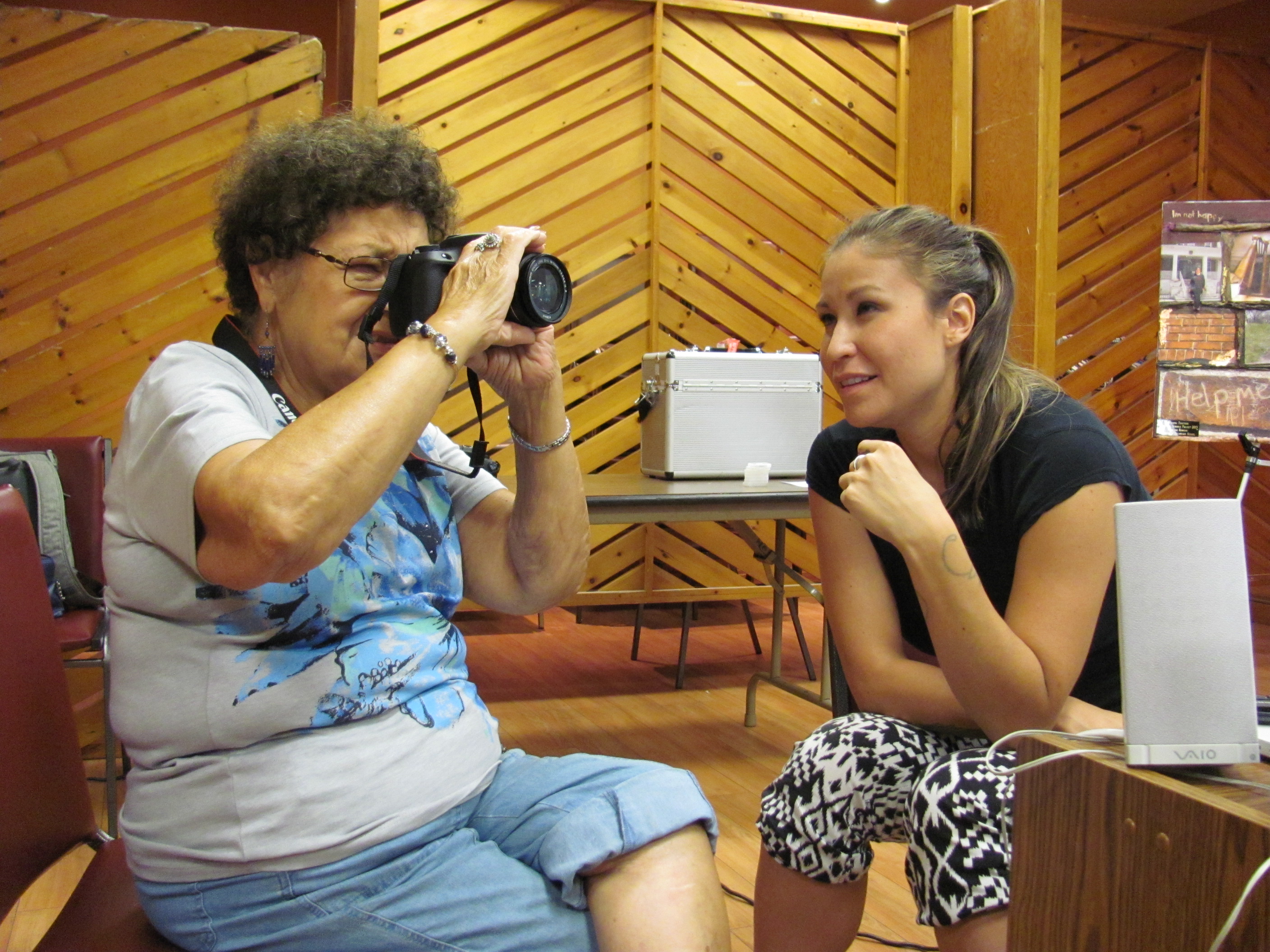
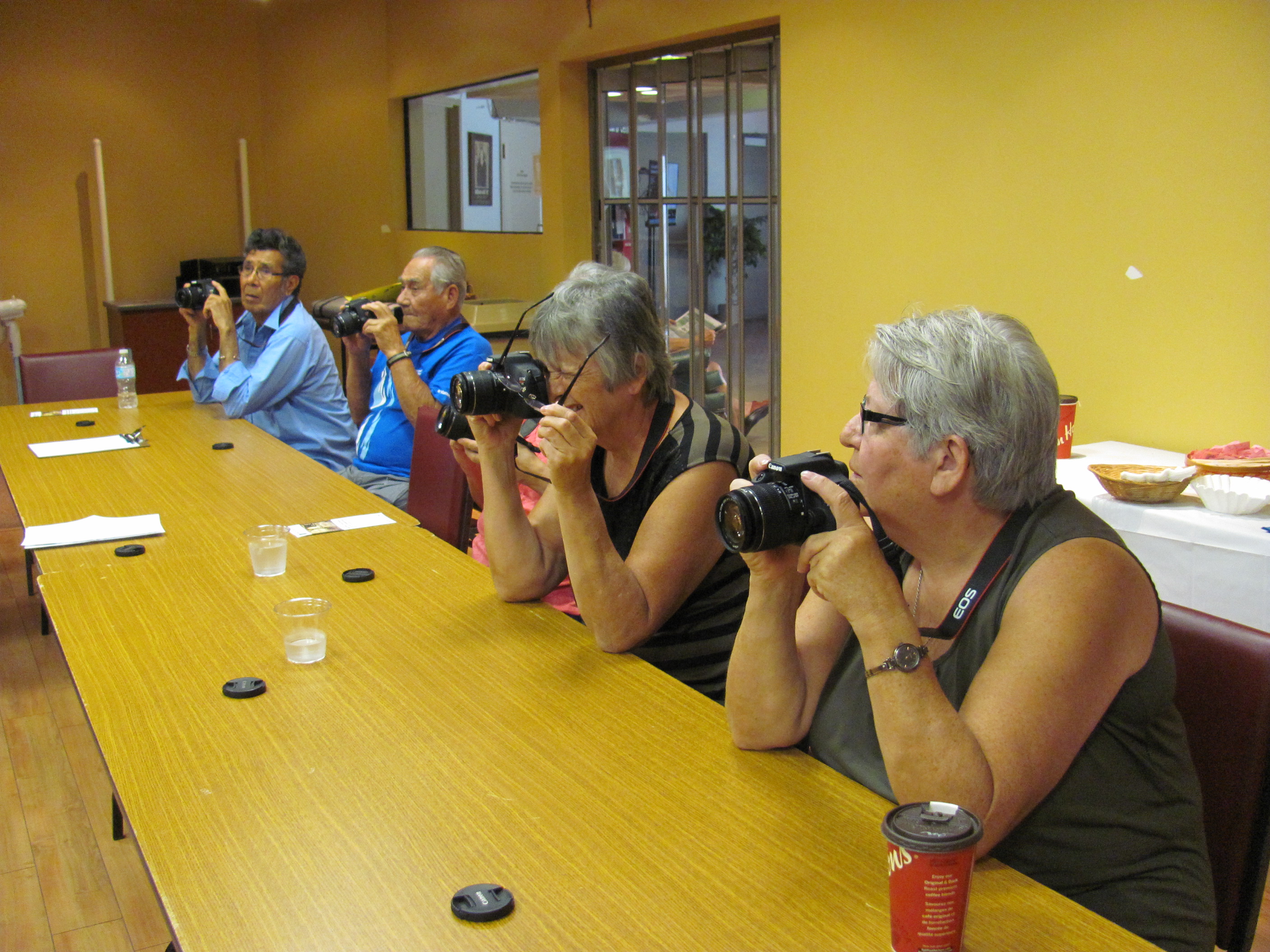
The Project began in 2013 with a presentation on the history of residential schools. Students participated in workshops facilitated by local First Nations artists. A journalist on information gathering and interview skills and a photographer on the art of digital photography to tell a story gave workshops to the students. We then left the classroom to visit the Woodland Cultural Centre, former Mohawk Institute for a tour. Guided by former residential school students, with camera, notepad and sketchbook in hand, the students walked side by side with survivors and listened to the stories of each space of the building where they stood. They heard a story of a child waiting by the window for hours, wondering why his mother was not coming to get him and then discovering those hours turned into years and that she was never coming for him. They heard the story of a little girl who was beaten for eating an apple and a child that loved to scrub the floors in the stairwell so she could have a chance to look out the window. Survivors became transparent and shared sad stories of always being hungry, lonesome and crying many tears. We ended the day with questions and answers where the students discovered the pain and sadness didn’t end when the survivors got to go home. They took it with them and have spent their whole lives carrying this heartbreaking legacy.
The students then returned to the classroom with a new awareness of what the survivors had suffered, what some of their own grandparents had gone through and how it still affects our community today. A First Nations artist then gave them workshops in the art of mixed media. This gave the students a creative place to put what they had come to know as seen through the eyes of the survivors.
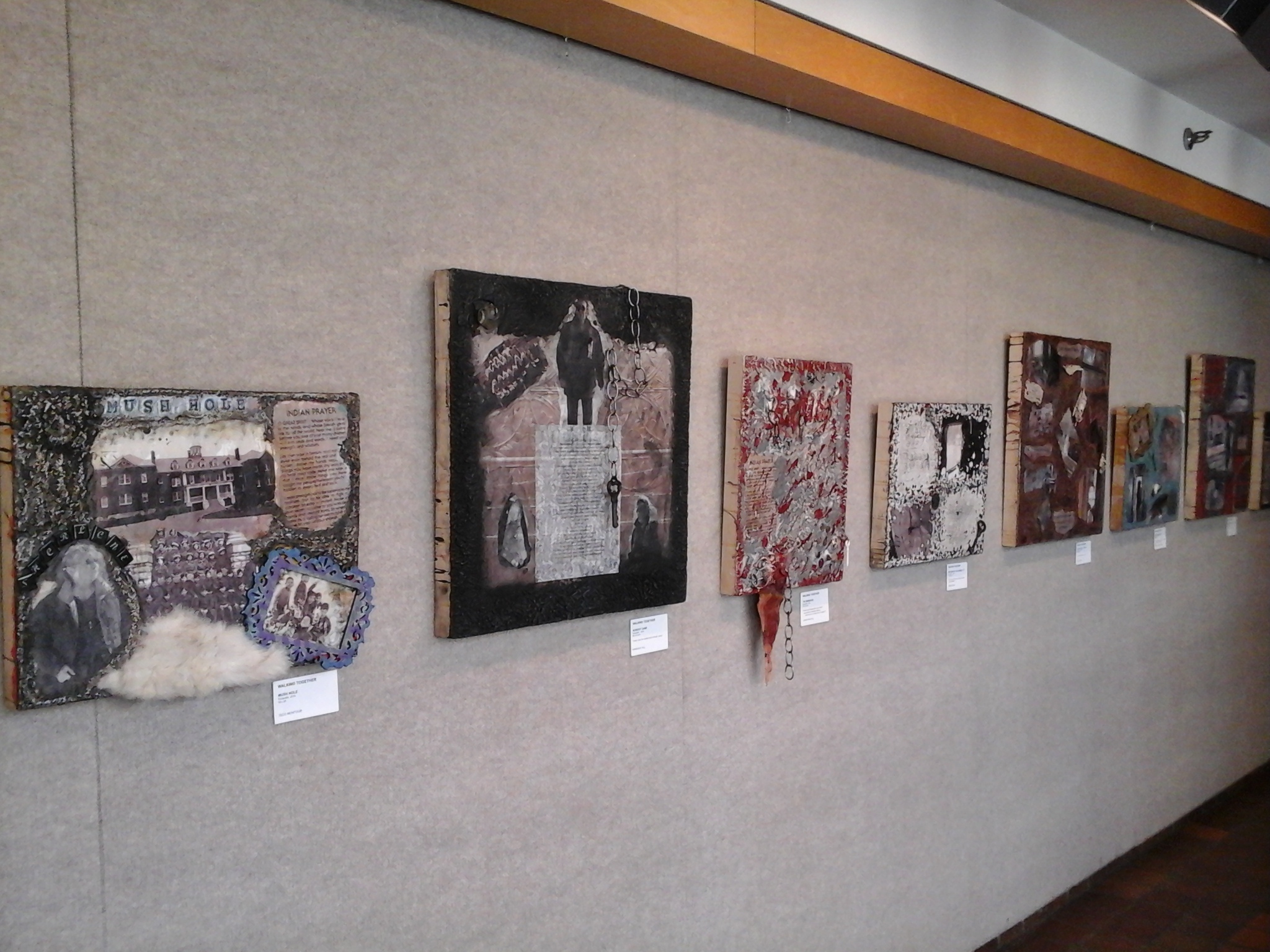
The 24” x 36” white canvas lay before each student waiting to reveal what these young people had discovered. Hearing about residential school was one thing, but spending a day with a survivor of the school had made it real. Realizing that these things had happened to some of their own family, to people of this community, to innocent little children who had done nothing wrong gave these students the images and words for their canvas.
Once the artwork was complete it was exhibited at Woodland Cultural Centre in Brantford. During this time the Senior Specialist for the Truth and Reconciliation Commission came to see the works. She invited the students from the project to come to Toronto for The Year of Truth and Reconciliation proclamation. The students met former National Chief of the Assembly of First Nations Phil Fontaine, who himself is a residential school survivor. They also got to meet the Chair of the Indian Residential Schools Truth and Reconciliation Commission Justice Murray Sinclair. It was a very significant moment for these youth. One of them spoke on their experience of doing the project and both Phil Fontaine and Murray Sinclair praised all the students and encouraged them to continue to be a voice for their communities and for their Nations.
Two years later I submitted a grant application to Canada Council for the Arts to do the project again…
We will continue the story of Lorrie’s incredible project in part 2

